
A cleaner CRM foundation for revenue operations
We help companies improve CRM structure, data quality, automation logic, and connected systems in HubSpot.
This gives sales, marketing, and support teams a more reliable system to work from — with cleaner data, clearer rules, and fewer operational gaps.
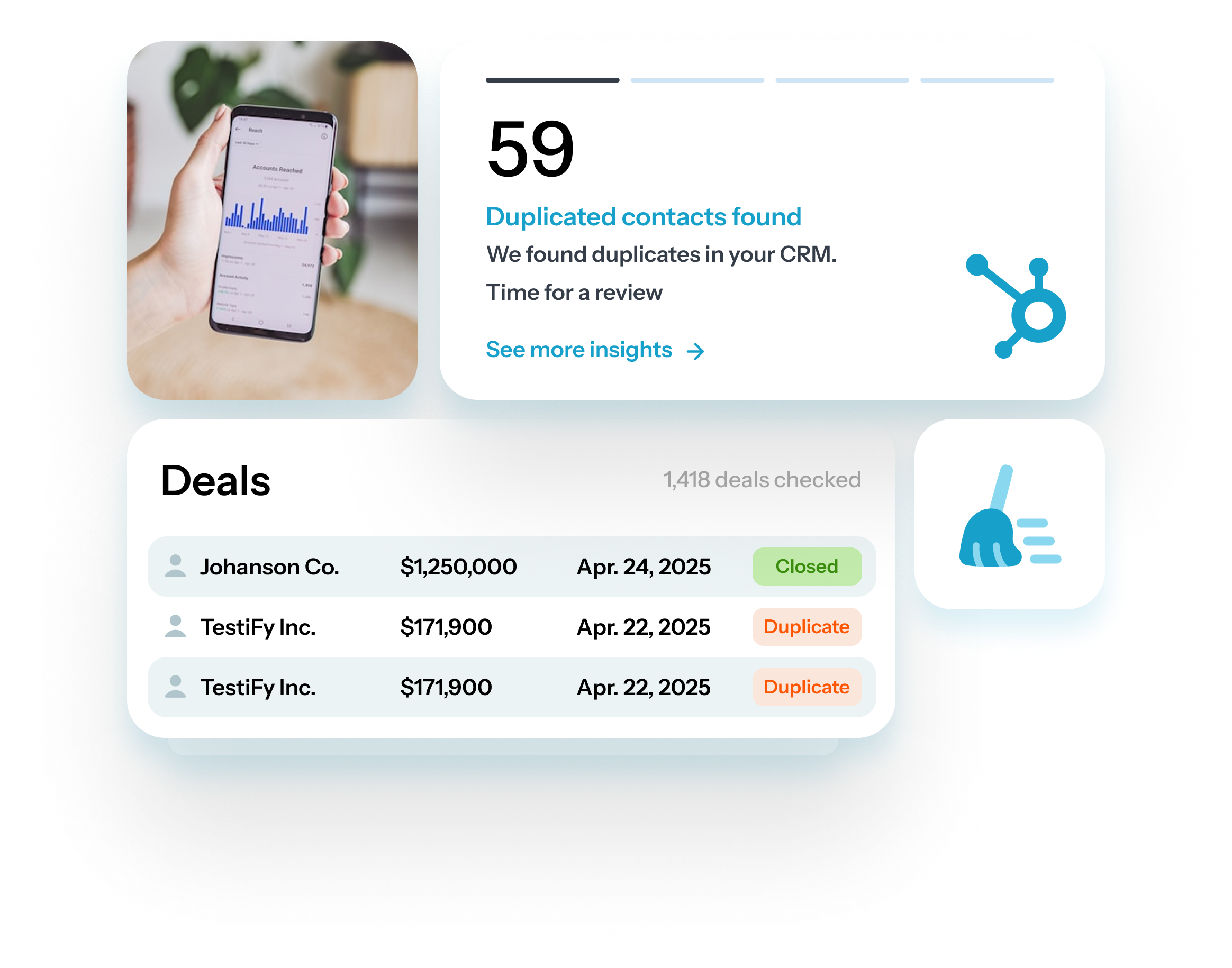


You focus on growth. We run the operational side.
We help sales, marketing, and customer support teams work with better structure, clearer ownership, and fewer operational gaps — so the system behind revenue is easier to manage, trust, and improve.
Where CRM infrastructure usually breaks down
CRM data is incomplete, duplicated, or hard to trust
Properties, lifecycle stages, and owner rules are inconsistent
Reports depend on manual cleanup or spreadsheet exports
Workflows overlap, conflict, or no longer match the real process
Integrations sync data incorrectly or create gaps
No one clearly owns CRM structure, governance, or data quality

What we help improve

CRM structure and governance
We help organize objects, properties, lifecycle stages, ownership rules, required fields, naming conventions, and other core CRM structures.
Data quality and hygiene
We help identify and reduce duplicates, incomplete records, inconsistent values, outdated fields, and other data quality issues that affect reporting and automation.
Workflow and automation governance
We review, clean up, document, and maintain workflows so automation logic stays clear, useful, and aligned with the current business process.
Integrations and data sync
We help review how HubSpot connects with other systems, where data sync breaks down, and how connected tools affect CRM reliability.
Reporting data foundation
We help structure the underlying data needed for dashboards, attribution, pipeline reporting, service reporting, and management visibility.

What a cleaner CRM foundation creates
CRM infrastructure is not only about cleanup.
It creates a more reliable operating layer for sales, marketing, support, and leadership.
Infrastructure outcomes
Cleaner CRM data and fewer duplicate records
More consistent properties, stages, and ownership rules
Better workflow structure and automation control
More reliable reporting and dashboard inputs
Clearer data flow between HubSpot and connected tools
Documented rules for how the CRM should be maintained
Operational work in practice

CRM and reporting foundation
A growing B2B services company needed a more reliable CRM foundation across sales, customer-facing processes, workflows, and management reporting. The work focused on keeping HubSpot easier to trust, maintain, and improve as the business changed.
What was included
- CRM structure, core properties, and ownership rules maintained over time
- Data quality checks and improvements across key CRM records
- Workflow logic reviewed and adjusted as processes changed
- Reporting inputs and dashboard structure maintained for better visibility
- Practical governance rules for keeping the CRM cleaner and easier to manage
How we approach CRM and data infrastructure
System review We review the current CRM structure, data quality, workflows, integrations, reporting dependencies, and governance gaps.
Data and process mapping We map how data enters HubSpot, how it moves between objects and systems, and where quality or ownership breaks down.
Cleanup and restructuring We clean up key CRM elements: properties, fields, lists, lifecycle stages, workflows, duplicate logic, views, and reporting inputs.
Governance and maintenance We define practical rules for keeping the CRM clean over time — including ownership, naming conventions, workflow control, and data quality checks.
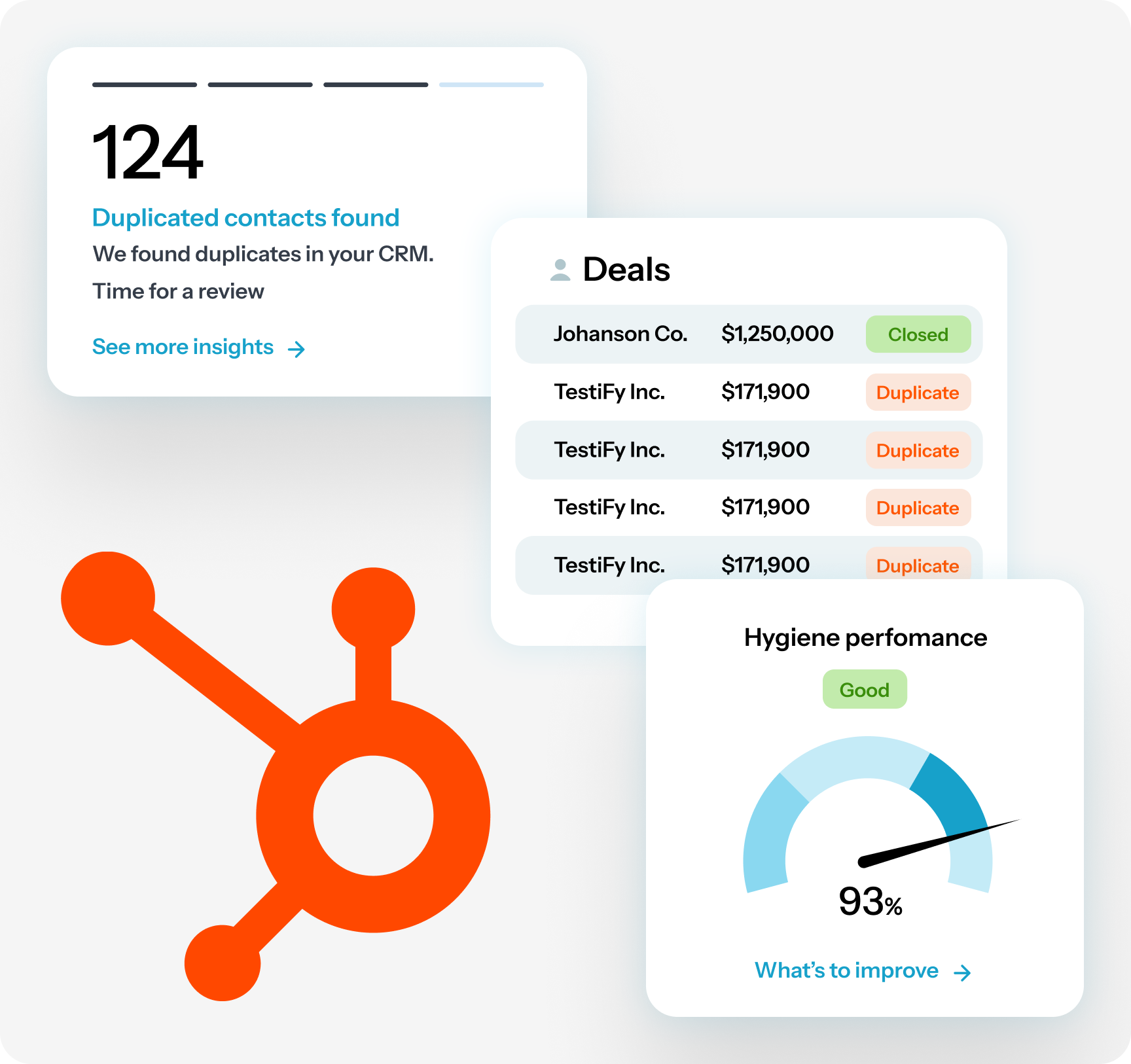
What this looks like in HubSpot
CRM and data infrastructure work usually sits across HubSpot Sales Hub, Marketing Hub, Service Hub, and Operations Hub.
Examples of work we often support:
Property cleanup and naming convention review
Duplicate management and data quality checks
Lifecycle stage and lead status structure
Required fields and validation logic
Workflow audit and automation cleanup
Integration and data sync review
When this becomes ongoing work
CRM infrastructure is rarely "done" forever.
As teams grow, new workflows are added, integrations change, reporting needs evolve, and data quality starts drifting again.
After the first cleanup, we can support the CRM foundation on an ongoing basis — helping keep data, automation, integrations, and reporting structures reliable over time.

Why Processive
We do not treat CRM infrastructure as a technical admin task only.
We look at CRM, data, workflows, and integrations as the foundation behind revenue operations. If that foundation is weak, sales, marketing, support, and reporting all become harder to manage.
The goal is simple: make HubSpot easier to trust and easier to operate.
Operational, not cosmetic
We focus on the CRM issues that affect daily work, reporting, and team execution.
HubSpot-focused
Most of the work happens inside HubSpot and the connected systems around it.
Built for data reliability
We help make CRM data, automation logic, and reporting inputs more consistent.
Designed for maintenance
We help create structures and rules that can be maintained as the system grows.
Book a 20-min Call
Book a short call to discuss where your CRM structure, data quality, automation, or integrations need attention first.